Dye testing
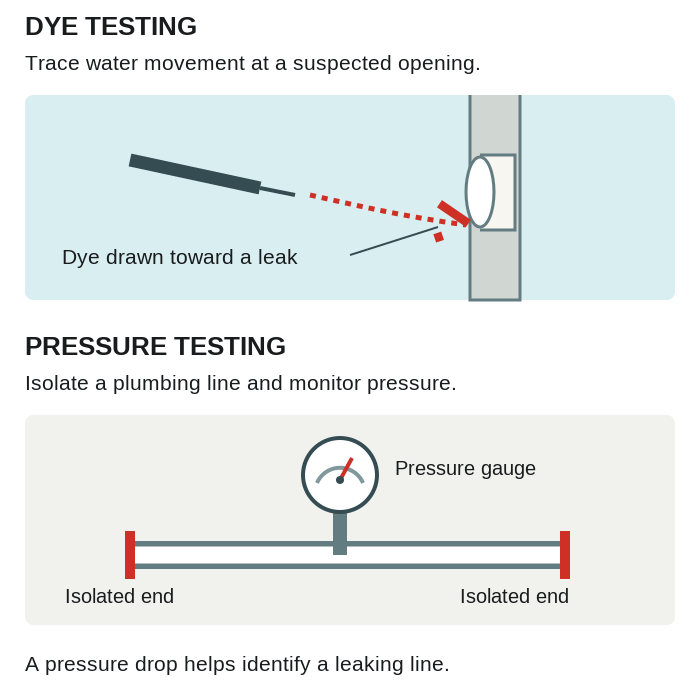
With the water still, we place a small amount of leak-detection dye close to suspected cracks, fittings, skimmer areas, and other potential leak points. Dye being drawn into an opening helps identify where water is escaping.

If your pool keeps losing water and you cannot see a leak at the equipment, request pool leak detection. Tell us whether your property has a pool only or a pool and spa so the office can confirm the right scope.
Palm Beach County and surrounding areas
Licensed CPC1460058 · Fully insured
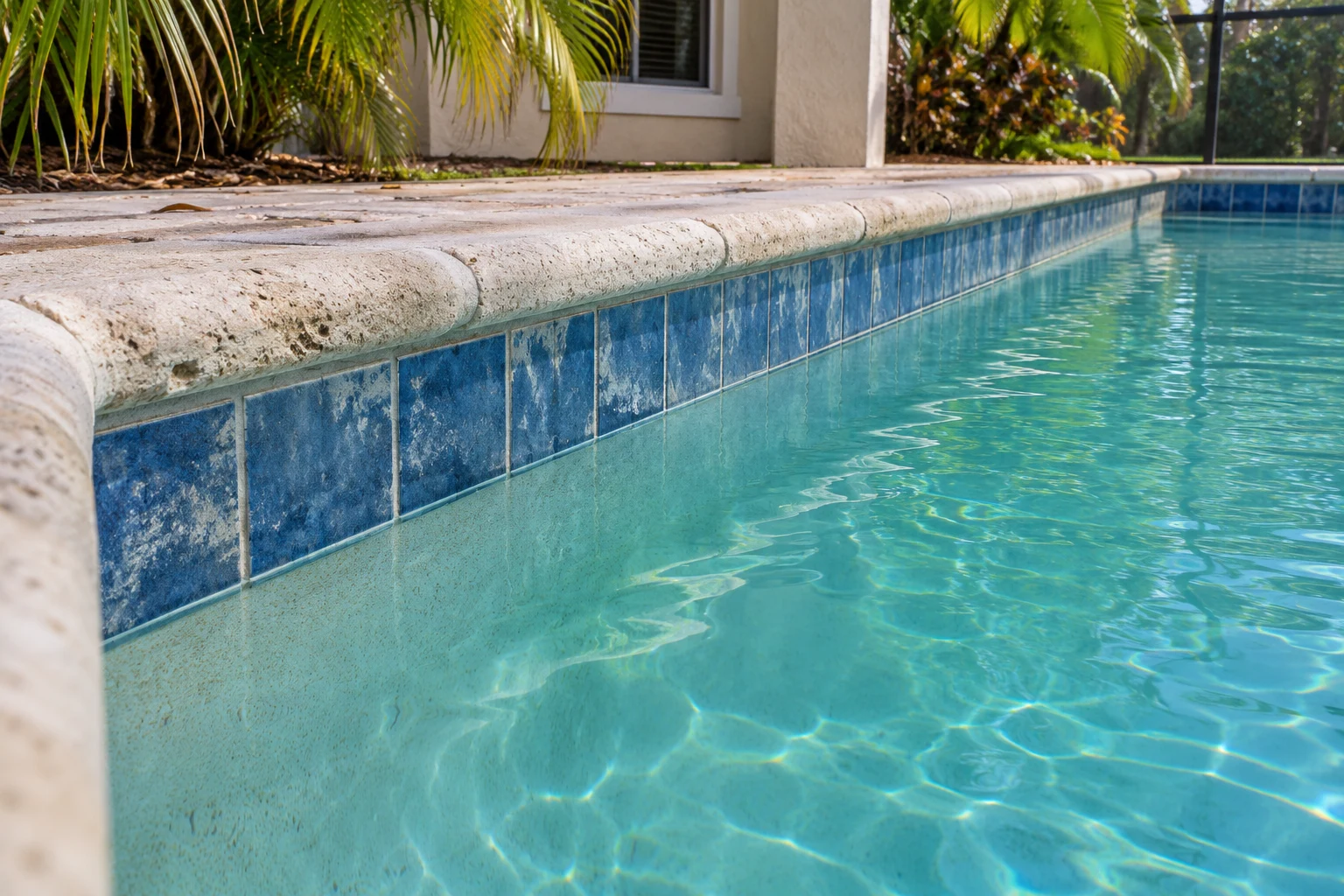
Pool and spa leak detection is $550. Putty patches are included in the leak-detection fee. Repairs beyond putty patching are quoted separately after the findings are reviewed.
We review your water-loss history and any bucket-test results you have, inspect the pool and equipment, and use dye testing and plumbing pressure testing to investigate the leak.
With the water still, we place a small amount of leak-detection dye close to suspected cracks, fittings, skimmer areas, and other potential leak points. Dye being drawn into an opening helps identify where water is escaping.
We isolate plumbing lines and test whether they hold pressure. A pressure loss helps identify a leaking line and narrow the investigation. This separates plumbing issues from leaks at the pool structure or fittings.
Putty patches are included in your leak-detection fee where putty is suitable for the leak found. We explain what was patched and discuss any further work. Repairs beyond putty patching are quoted separately for approval.
Testing is performed by our technicians. Accessible areas, plumbing layout, water clarity, and the findings determine the work needed to locate the source. A putty patch is not a substitute for any further repair the findings call for.
Losing around 2 inches in any given week could indicate a leak and is worth checking.
Even a smaller loss of around ¼ inch each week for 3–4 weeks in a row could be a sign of a leak, especially if it is a new or persistent change.
These are reasons to investigate, not proof of a leak. Evaporation varies with heat, humidity, wind, and pool use. A bucket test compares your pool’s loss with evaporation under the same conditions.
Optional: try the 24-hour bucket testThis test is optional. You do not need to complete a bucket test before requesting leak detection. If you would like to check at home first, use a clean 5-gallon bucket, pool water, a marker or waterproof tape, and a ruler. Choose a dry day with no swimming or added water.
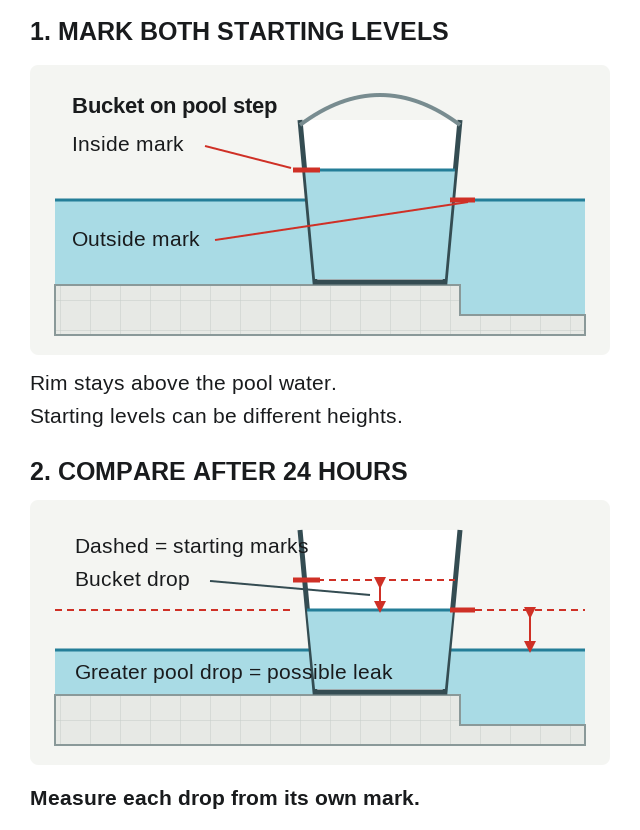
Start at the normal operating water level. Turn off the automatic water fill, if fitted, and leave fountains, spillovers, and other water features off. Keep your usual pump schedule; note it with your results. Do not add water, backwash, or use the pool during the test.
Set the bucket securely on the first or second pool step, partly submerged with its rim above the pool water. Fill it with pool water to about 1 inch below the rim. Keep it stable so it cannot float or tip.
Mark the water level inside the bucket, then mark the pool’s water level on the outside of the bucket. The two starting levels do not need to be the same height.
Leave the bucket in place and check it at the same time the next day. Rain, splashing, a tipped bucket, or added water can distort the result; restart on a dry day if that happens.
Measure from each starting mark down to its new water level. If the pool drops noticeably more than the bucket, a leak may be present. If the drops are similar, evaporation may explain the loss during that test. Keep monitoring if the problem continues.
Evaporation may explain the loss.
A leak is suspected. Share the measurements with us.
Record both measurements and the date. If the water falls below the skimmer’s safe operating level, stop the test and contact your pool professional; do not let the pump run dry.
If the pool is cloudy, green, or too low, contact our office before the visit. We will confirm any additional preparation instructions.
No. The bucket test is an optional way to compare water loss with evaporation. You can request leak detection without doing it.
Select the option that covers the areas you want investigated. If you are unsure, request a callback so our office can confirm the scope before the visit.
Putty patches are included in the leak-detection fee. Repairs beyond putty patching, such as plumbing repairs or replacement work, are discussed and priced separately before approval.
Water loss can have several causes. Tell us what you have observed so the office can discuss the appropriate next step without guessing from the website.
Tell us about your pool. Our office will follow up.
Based in Palm Beach County. Projects in Broward, Martin, and St. Lucie counties are considered based on job scope or the number of jobs in the area.
Send the job address and scope so our office can confirm availability.